
Asbestos Demolition in Brighton & Bayside
If your home was built before 1990, assume there is asbestos in it somewhere. That is not a reason to panic — it is a reason to find it before the machines arrive, not during.
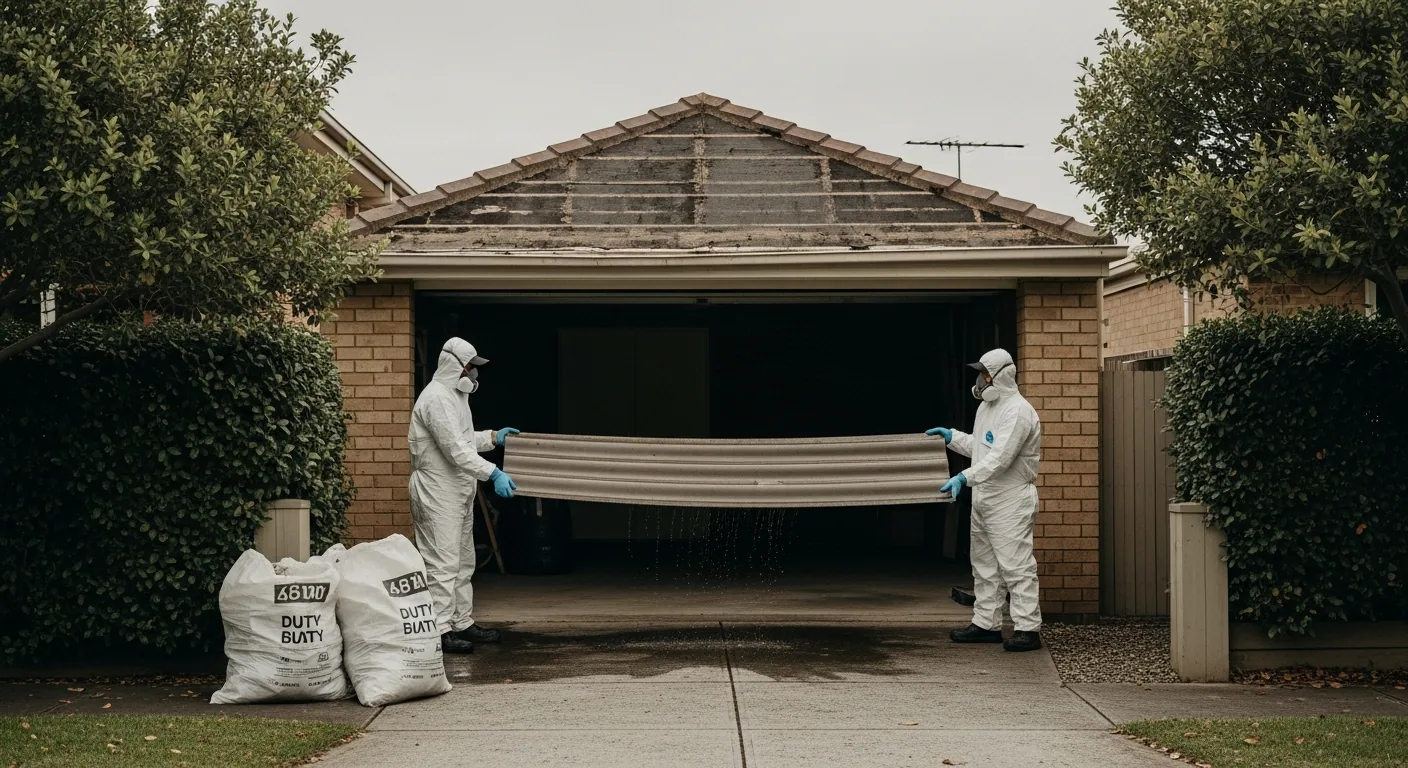
Your home is not a workplace — until you hire someone
This is the part most homeowners have never been told, and it is genuinely reassuring.
Victoria's occupational health and safety laws do not apply to a private residence. As an owner living in your own home, you have no asbestos register to keep and no compliance obligation to meet.
The moment you engage contractors, that changes: the property becomes a workplace, and the duty to identify asbestos before demolition transfers to the people doing the work. That duty is ours. Where no asbestos register exists — and for a family home, one never does — a determination of what is present has to be made *before* demolition begins.
So the first thing that happens on an asbestos job is not a machine. It is an audit.
Where it hides in Bayside homes
Victorian government guidance is direct about it: asbestos cement was used in building materials from the mid-1940s until the late 1980s, and many homes built before 1990 contain it. Given the age of the housing stock through Brighton, Hampton, Sandringham and Beaumaris, that covers a very large share of what we demolish.
The places it turns up most often:
Eaves and soffit linings
Internal and external wall cladding
Wet-area sheeting in bathrooms and laundries
Corrugated roof sheeting on garages and sheds
Boundary fencing
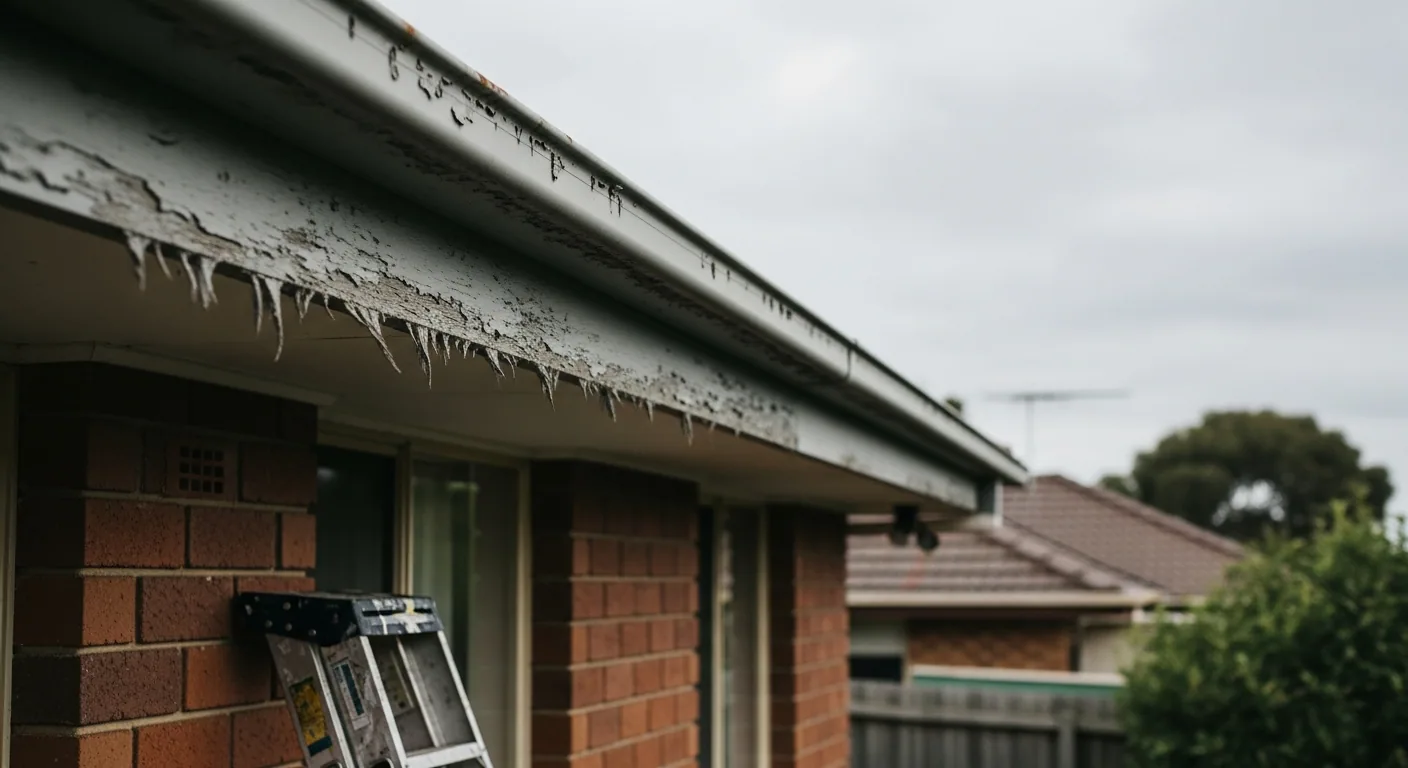
It is also common in the soil where an older shed or house was demolished years ago, long before anyone tracked where the waste went. On a knockdown-rebuild that matters, because it is your builder who finds it.
You cannot tell by looking. Confirming asbestos means taking a sample and having it analysed under a microscope by a NATA-accredited laboratory. Sample testing is inexpensive — commonly under $100 per sample — and a full residential inspection typically runs a few hundred dollars. That is a small price for turning a guess into a number.
Who is legally allowed to remove it
There is a lot of confidently wrong information about this, including the claim that no homeowner may ever touch asbestos. Here is the actual position in Victoria.
Class A licence — covers friable asbestos, the crumbly material that releases fibres easily, and non-friable as well.
Class B licence — covers non-friable (bonded) asbestos only, which is the sheeting and cladding in most houses.
Unlicensed removal is lawful only for non-friable material where the area is 10 square metres or less *and* the total work is under one hour in any seven-day period. Both conditions, not either.
Friable asbestos always requires a Class A licensed removalist, at any quantity.
Ten square metres is a very small amount — a single garage roof is typically 20 to 40 square metres, which is well past the threshold. In practice, virtually every asbestos-affected demolition is licensed work. We engage licensed removalists to carry it out, and you are entitled to see the licence before anyone starts.
Notification and clearance
Before licensed removal begins, WorkSafe Victoria has to be notified — at least five days ahead for friable asbestos or for more than 10 square metres of non-friable, and at least 24 hours ahead for smaller non-friable jobs.
Afterwards, a clearance certificate is issued by what Victorian law calls an independent person — someone with the right knowledge and experience who is not the removalist marking their own homework. For domestic premises, the obligation to obtain that certificate sits with the licence holder, not with you.
Where the waste actually goes
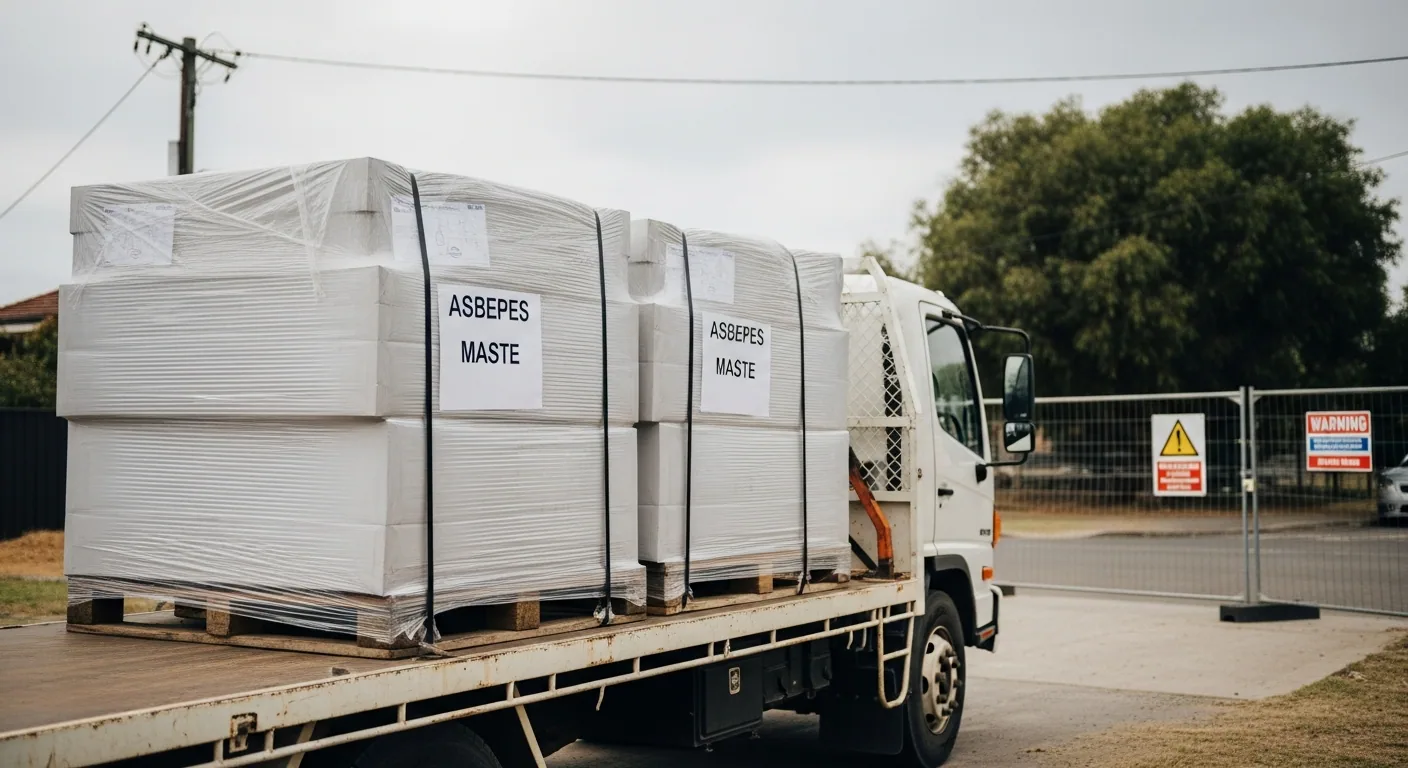
Asbestos is classified as reportable priority waste. It cannot go in a skip, and it cannot go to a general landfill.
Anyone transporting it needs an EPA permission to carry reportable priority waste, and every movement is logged in EPA Victoria's Waste Tracker system, from the site to a facility authorised to receive it. You should receive that waste record. Missing or incomplete tracking records can result in notices and fines, so it is worth actually asking for it rather than assuming.
What it adds to the cost
Asbestos is the single biggest variable in a demolition quote, and anyone giving you one number for it is guessing. Realistically it falls into three bands:
A small amount of bonded material — eaves, a flue, a bathroom — adds roughly $2,000 to $5,000.
A genuinely asbestos-clad house adds roughly $5,000 to $15,000.
Extensive or friable asbestos can add $15,000 to $30,000 or more.
Bonded removal is commonly quoted around $35 to $80 per square metre; friable work runs two to three times that and requires the Class A licence, air monitoring and clearance.
The honest version is that a $300 to $600 audit is what converts that range into a fixed figure. We would rather find it now than discover it on day one and hand you a variation.
The paperwork you should end up holding
Insist on all four, from any demolisher:
1. The asbestos identification or audit report 2. Confirmation that WorkSafe was notified 3. The clearance certificate from an independent person 4. The EPA Waste Tracker record showing where the waste went
If a quote is cheaper than everyone else's, this is usually what is missing from it.
Why choose us for asbestos-aware demolition & disposal
- Audit before demolition, so asbestos is a known cost not a variation
- Licensed removalists engaged — you can see the licence before work starts
- WorkSafe notification handled on the correct 5-day or 24-hour timeline
- Clearance certificate issued by an independent person, not the removalist
- EPA Waste Tracker record handed to you showing where the waste went
Asbestos-Aware Demolition & Disposal — common questions
How do I know if my house has asbestos?
You cannot tell by looking — the only conclusive method is taking a sample and having it analysed under a microscope by a NATA-accredited laboratory. Victorian government guidance is that if the material was installed before 1990, it is safest to assume it does contain asbestos. Individual sample tests are commonly under $100, and a full residential inspection usually runs a few hundred dollars.
Does asbestos have to be removed before the house is demolished?
Yes. Whoever manages the site has a duty to identify any asbestos likely to be disturbed before demolition starts, and where no asbestos register exists — which is the case for every family home — a determination has to be made first. It cannot simply be knocked down with the house and sorted out afterwards. That is exactly the scenario WorkSafe prosecutes.
How much does asbestos add to the cost of demolishing my house?
It depends entirely on how much there is and whether any of it is friable, so treat any single number with suspicion. As a guide: a small amount of bonded material adds roughly $2,000 to $5,000; a genuinely asbestos-clad house adds roughly $5,000 to $15,000; extensive or friable asbestos can add $15,000 to $30,000 or more. An audit costing a few hundred dollars replaces that range with a real figure.
Who is legally allowed to remove asbestos in Victoria?
Friable asbestos always requires a Class A licensed removalist. Non-friable (bonded) asbestos requires a Class B licence, unless the job is 10 square metres or less and takes under one hour in any seven-day period — both conditions have to be met. Ten square metres is very little; a single garage roof is usually 20 to 40 square metres, so in practice almost all of this is licensed work.
My neighbour is demolishing a house with asbestos — is that safe?
It should be, and there are specific controls that make it so. WorkSafe has to be notified at least five days before licensed removal of friable asbestos or more than 10 square metres of bonded material. The removal area is signed and barricaded, and for friable work air monitoring runs in the surrounding area against a control level of 0.01 fibres per millilitre. If you have concerns, ask the site for the contractor’s details — a legitimate operator will give them to you.
Do I get a clearance certificate, and who issues it?
Yes. After licensed removal, a clearance certificate must be issued before the area is reoccupied. Victorian law requires it to come from an "independent person" — someone with the necessary knowledge and experience who is independent of the removal work, so a contractor cannot sign off its own job. On domestic premises the duty to obtain the certificate sits with the licence holder rather than with you as the owner.
What paperwork should I receive at the end?
Four things: the asbestos identification or audit report, confirmation that WorkSafe was notified, the clearance certificate from an independent person, and the EPA Waste Tracker record showing where the waste was taken. That last one matters — asbestos is reportable priority waste, and EPA warns that missing or incomplete tracking records can lead to notices and fines.
Where does the asbestos waste actually end up?
At a landfill specifically authorised to receive it. Asbestos is classified as reportable priority waste in Victoria, so it cannot go in a skip or to a general tip. Whoever transports it needs an EPA permission to carry reportable priority waste, and the whole movement is logged in EPA Victoria’s Waste Tracker system. Authorised sites can still decline a load, so it is booked in ahead rather than turning up.
Ready to book asbestos-aware demolition & disposal?
Contact us today for your free, no-obligation quote.