
Pool, Garage & Shed Removal in Brighton & Bayside
Reclaiming the back half of your block usually starts with a pool nobody swims in any more. The decision that matters is not who removes it — it is whether you ever want to build over that ground.
Partial or full? Decide what the space becomes first
There are two ways to take out an in-ground pool, and the right answer depends entirely on what goes there afterwards.
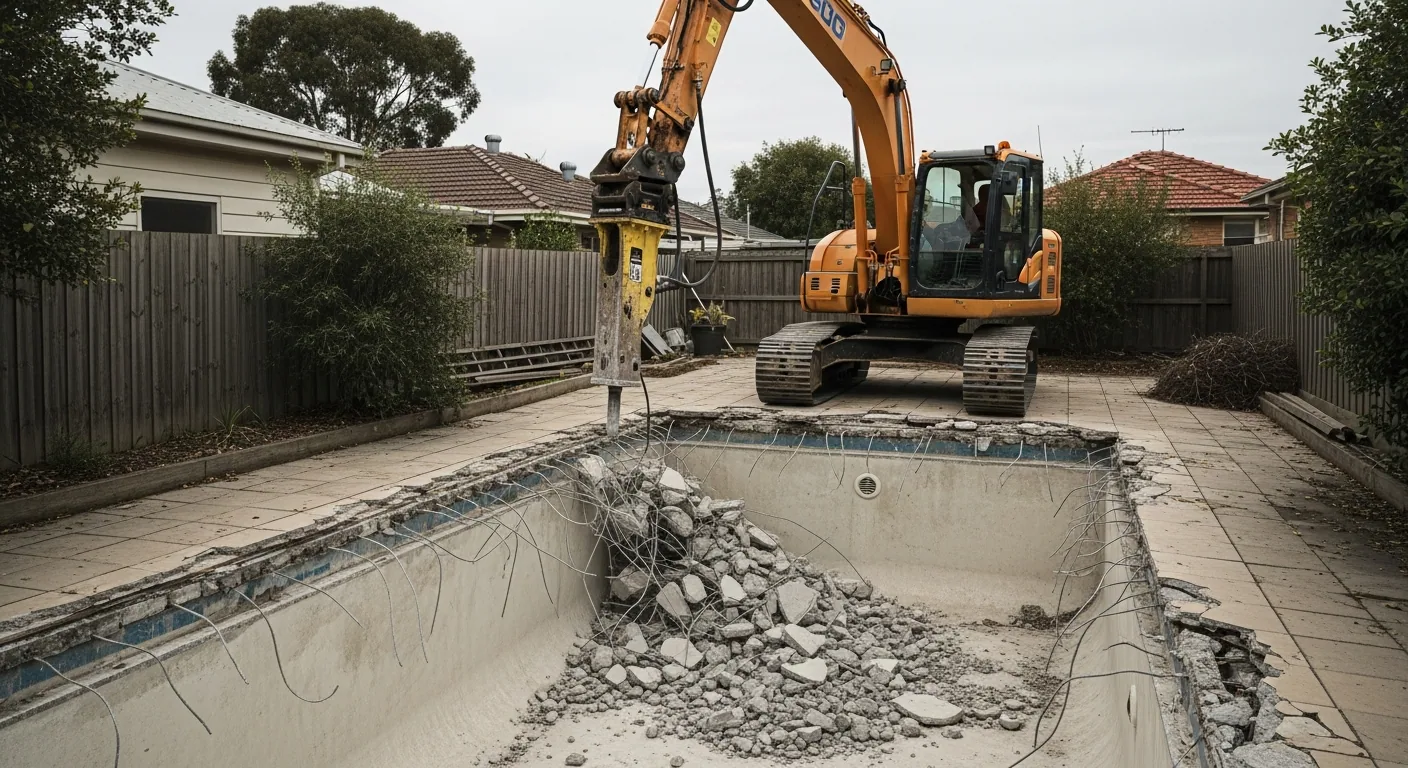
Partial removal — sometimes called pool infill — breaks out the top 600 to 800 millimetres of the pool walls, punches drainage holes through the base so water cannot build up underneath, pushes the broken material into the cavity and backfills over it. It is quicker and it is cheaper.
Full removal takes out the entire shell, walls, base, steel and plumbing, carts it all off site, and backfills with certified clean fill placed and compacted in engineered layers.
The rule of thumb is simple:
Lawn, garden or paving? Partial removal is perfectly legitimate and will save you thousands. Anyone insisting you must always go full is selling.
An extension, granny flat, garage, or anything with footings? Full removal, with a compaction certificate.
Why building over it is the whole question
Under AS 2870, the residential slabs and footings standard, any site containing fill is classified Class P — a problem site. Standard footing details no longer apply and the design has to be engineered specifically for that ground.
Where fill has gone in without compaction control, engineers have to assume it will not carry building loads at all, which means thickened slabs, extra reinforcement and footings piered down through the fill to firm natural ground. That is expensive, and it is the bill you inherit later for saving money now.
Fill placed under supervision to AS 3798 Level 1 — material verified, laid in controlled layers, compaction tested as it goes — can be certified. That certificate is what keeps your options open.
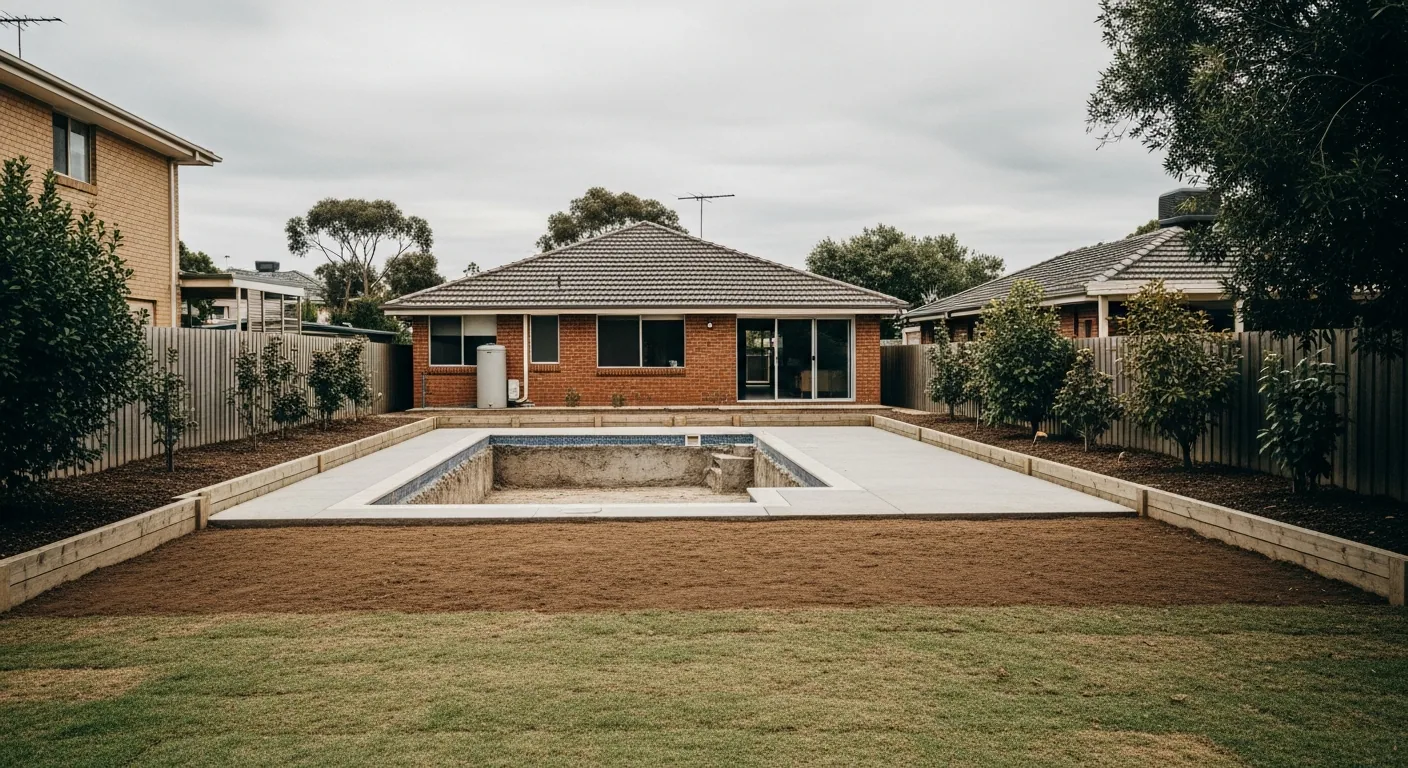
One more honest point: backfill continues to settle for months. Even done well, a partially filled pool is not ground you want to build on next season.
Telling council the pool is gone
This is the step almost everyone misses, and it quietly costs money.
Since December 2019 every swimming pool and spa in Victoria capable of holding water more than 300 millimetres deep has had to be registered with council, with a safety barrier compliance certificate lodged every four years. Plenty of Bayside owners are now paying for four-yearly inspections on a pool the family stopped using a decade ago — which is exactly why they start looking into removal.
Removing the pool does not remove you from the register. You have to deregister it:
1. Lodge a pool or spa deregistration form with Bayside City Council 2. Attach photographic evidence that the pool is gone or can no longer hold water deeper than 300 millimetres 3. Council will generally inspect to confirm 4. Council removes it from the register and confirms in writing
Photograph the demolition in stages, not just the finished result — councils ask for progressive evidence. There is no fee to deregister, but there is also no refund of registration fees already paid, so the sooner it is done the better.
Until deregistration is complete you remain on the register with a live barrier-compliance obligation, which is why the pool fence generally cannot come down first.
Concrete, fibreglass and vinyl come out differently
Concrete and gunite shells are broken up with a hydraulic hammer. The rubble goes to a licensed concrete recycler and is crushed into aggregate, and the steel reinforcing is separated for scrap — which keeps disposal costs down.
Fibreglass shells cannot be broken in place; they splinter into sharp fragments that are near impossible to contain. The shell is cut into sections and lifted out whole. It is often the fastest job on site — sometimes a single day — but there is no recycling pathway, so it all goes to landfill. That frequently makes fibreglass *dearer* to remove than concrete, which is the opposite of what most owners expect.
Vinyl-liner pools are the simplest: liner, ladder and filtration out, then the steel or polymer wall panels dismantled.
Pool electrical, plumbing and any gas line to the heater are isolated and capped at the equipment pad before anything is broken.
Garages, sheds and carports
A freestanding garage, carport or shed under 40 square metres generally does not need a demolition permit — unless it is masonry, larger than that, heritage-listed, or taking it down would put people at risk.
In Brighton that exemption falls over more often than it holds. A brick garage is masonry whatever its size. Plenty of double garages are over 40 square metres. And a garage sharing a wall with the house is not freestanding.
Assume the roof contains asbestos. Corrugated "super six" sheeting and fibro walls are the norm on Bayside garages built before the late 1980s. A garage roof is typically 20 to 40 square metres, which is past the 10-square-metre threshold for unlicensed work, so it is a licensed removal job. Budget roughly $2,500 to $6,000 for a fibro garage or shed of that size.
Whether the slab comes out is your call, and it is the main cost you control. Leave it if the area is becoming a shed base, parking or paving. Take it out if it is going back to lawn or garden, or if new footings are going in.
Indicative costs and timing
Pool removal in Melbourne generally runs $5,000 to $15,000 for a straightforward fill-and-compact job, with full removal typically 30 to 50 per cent more than partial. Garage demolition in the inner Melbourne band, which includes Bayside, commonly falls between $2,200 and $6,000. Small garden sheds start around $500. Concrete removal is priced per square metre.
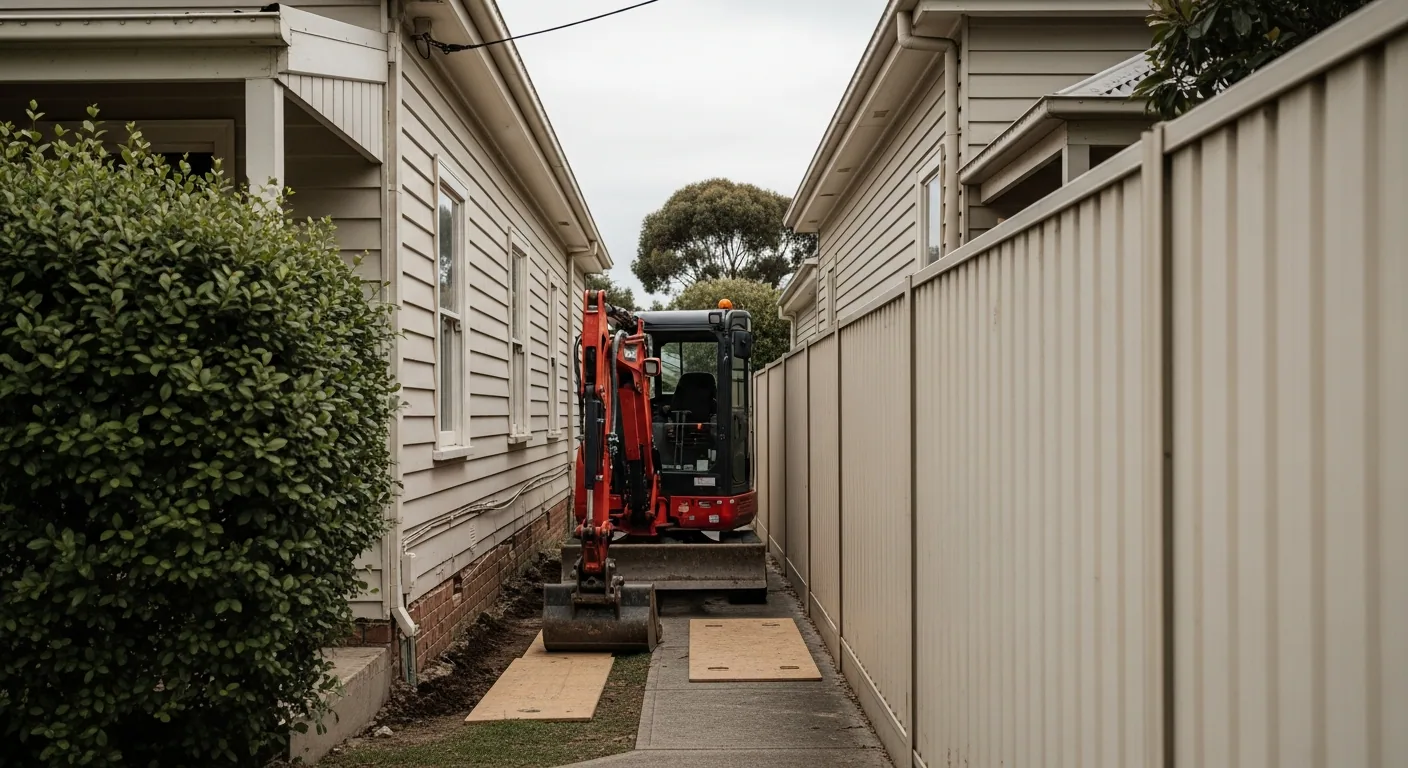
Access drives price here more than anything else. The classic Brighton block is deep and narrow with a single side path between the house and the boundary — and that determines what size machine gets to the back yard, or whether the material has to be barrowed out. It is why a phone estimate for a pool removal is worth very little and a site visit is worth a lot.
On site, a partial removal is usually two to three days and a full removal four to five. End to end, including approvals, allow around two to four weeks.
Why choose us for pool, garage & outbuilding removal
- Straight advice on partial vs full removal based on what the space becomes
- Certified clean fill, compacted in layers — with a compaction certificate when you need one
- Council deregistration paperwork and staged photographic evidence handled
- Tight side-access assessed on site, not guessed at over the phone
- Concrete recycled and steel recovered rather than landfilled
Pool, Garage & Outbuilding Removal — common questions
How much does it cost to remove a pool in Melbourne?
A typical fill-and-compact job generally runs between $5,000 and $15,000, with full removal usually 30 to 50 per cent more than partial. The four things that move the price are the size of the pool, what it is made of, whether you choose partial or full removal, and site access. On a narrow Brighton block, access is often the biggest single factor — which is why we quote on site rather than over the phone.
What is the difference between partial and full pool removal?
Partial removal breaks out the top 600 to 800 millimetres of the pool walls, punches drainage holes through the base, pushes the rubble into the cavity and backfills over it. Full removal excavates and carts away the entire structure, then backfills with certified fill in engineered, compacted layers. Partial is cheaper and perfectly fine if the area is becoming lawn or garden. Full is what you need if anything is ever built there.
Can I build over the area where the pool used to be?
Yes, but only with engineering, and the cost depends heavily on how the pool was removed. Any site containing fill is classified Class P under AS 2870, so standard footing details do not apply. Uncompacted fill is assumed to carry no building load, meaning thickened slabs and footings piered to firm natural ground. Fill placed and tested to AS 3798 Level 1 can be certified — so full removal with a compaction certificate keeps the option open, and partial removal effectively closes it.
Do I need council approval to remove a pool in Victoria?
Often yes. A demolition permit is generally required unless an exemption applies, and Victorian councils commonly require one where the pool sits within two metres of a boundary or another building. Requirements vary, so we confirm with Bayside for your specific site before starting. Separately, owner-builders cannot carry out demolition themselves — it has to be done by a registered demolition contractor.
Do I have to tell council I have removed my pool?
Yes, and this is the step most people miss. Every Victorian pool or spa able to hold water deeper than 300 millimetres has had to be registered since December 2019, with a barrier compliance certificate lodged every four years. To come off the register you lodge a deregistration form with photographic evidence, and council will usually inspect. There is no fee to deregister and no refund of fees already paid — but until you do it, you are still on the register with a live compliance obligation.
Do I have to tell a buyer the pool was filled in?
Keep the paperwork and the question answers itself. Your Section 32 obligation to supply a barrier compliance certificate applies to a pool that exists, so it ends with the pool. Separately, Victorian vendors have had a duty since March 2020 not to knowingly conceal material facts about a property. A buyer’s inspector or engineer will identify fill regardless, so our advice is to keep the engineer’s compaction certificate and the council deregistration letter — documentation turns an awkward question into a straight answer.
What happens to the pool fence, paving and decking?
Coping, paving and decking are quoted separately, and the fence is usually last rather than first — the safety barrier generally has to stay compliant until council has confirmed deregistration. Pool electrical, plumbing and any gas to the heater are isolated and capped at the equipment pad before demolition starts. Broken concrete goes to a licensed recycler to be crushed into aggregate and the steel is recovered for scrap.
Do I need a permit to demolish my garage or shed, and what about asbestos?
A freestanding garage, carport or shed under 40 square metres is generally exempt — but not if it is masonry, over that size, heritage-listed or a safety risk, and a brick garage is masonry at any size. On asbestos, assume the roof has it if the building predates the late 1980s. Because a garage roof is usually 20 to 40 square metres, it is past the 10-square-metre unlicensed threshold, so a licensed removalist does it. Budget roughly $2,500 to $6,000 for a fibro garage that size.
Ready to book pool, garage & outbuilding removal?
Contact us today for your free, no-obligation quote.